Social Psychology
Learned by Wesleyan University, this course was just phenomenal. Professor Scott Plous has explained this course so beautifully,
[Image no longer available]
Social psychology is the scientific study of how people think about, influence, and relate to one another.
We often see what we expect to see and don’t see what we don’t expect to see. But when it comes to social psychology, our assumptions and our expectations can sometimes lead to trouble. So at heart, social psychology is about questions, but it’s also about those hidden diamonds the hidden treasures that we don’t notice, but would make our life, our relationships, and our work a little bit richer if we did.
You know, it’s easy to say that psychology is just common sense, but when you dig deeper, there are all sorts of questions in which you can think of good reasons why the answer might be yes, and equally good reasons why it might be no. It’s the scientific study of how people think about, influence, and relate to one another. It uses many of the same experimental methods found in other branches of science.
One of the most basic questions we can ask about two people is whether they share the same reality whether they see the same thing when they’re both looking at it, whether they hear the same thing when they’re both listening to it?
Our perceptions are powerfully influenced by where our attention happens to be, by context, by past experience, expectations, motivations, and many other factors. In other words, our experience of reality is psychologically constructed

https://www.youtube.com/watch?v=v3iPrBrGSJM
Because we generally regard photographic images as generating fixed perceptions. We don’t think of our visual perceptions as a combination of something out there with what’s going on in our visual system at the time of perception, but in fact, that’s exactly what vision is, and it’s not just a matter of color.
[Image no longer available]
Ponzai illusion both the parallel lines are of equal length
1.Confirmation bias :
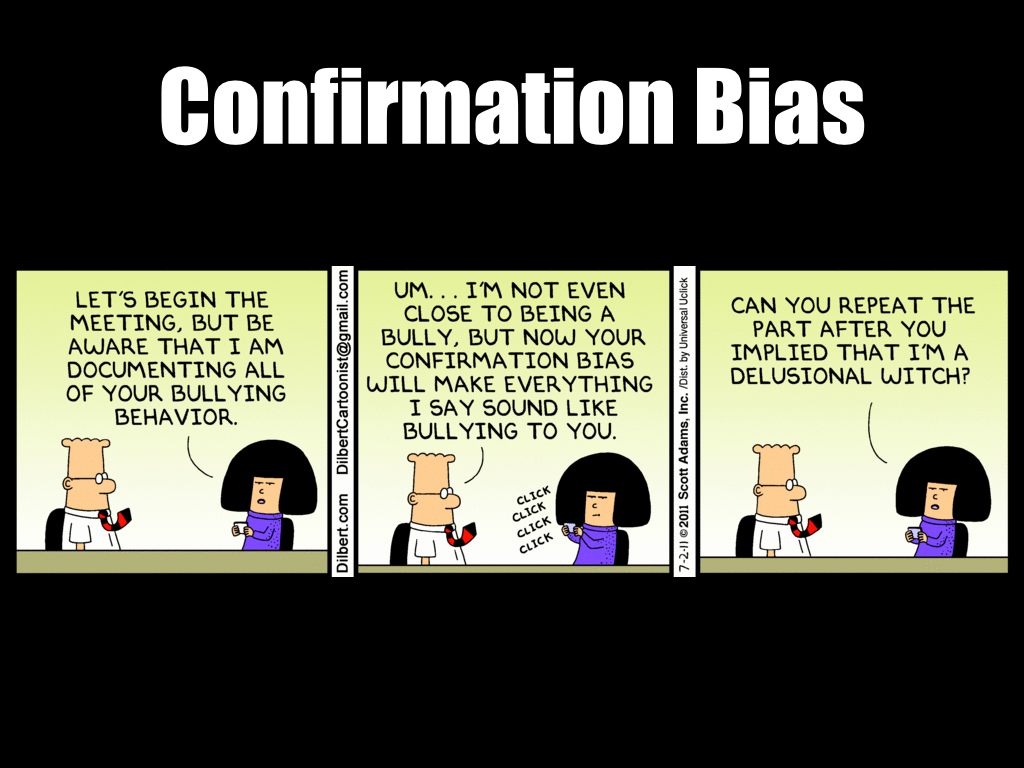
A confirmation bias is a preference for information that’s consistent with a preconception, rather than information that challenges it.
Yet, when we have a theory about something, and we get some supporting evidence, we typically conclude that the theory was correct. We don’t go out of our way to seek dis confirming evidence.
For example the Famous Four Card Task, “If a card has a vowel on one side, then it has an even number on the other side.”.
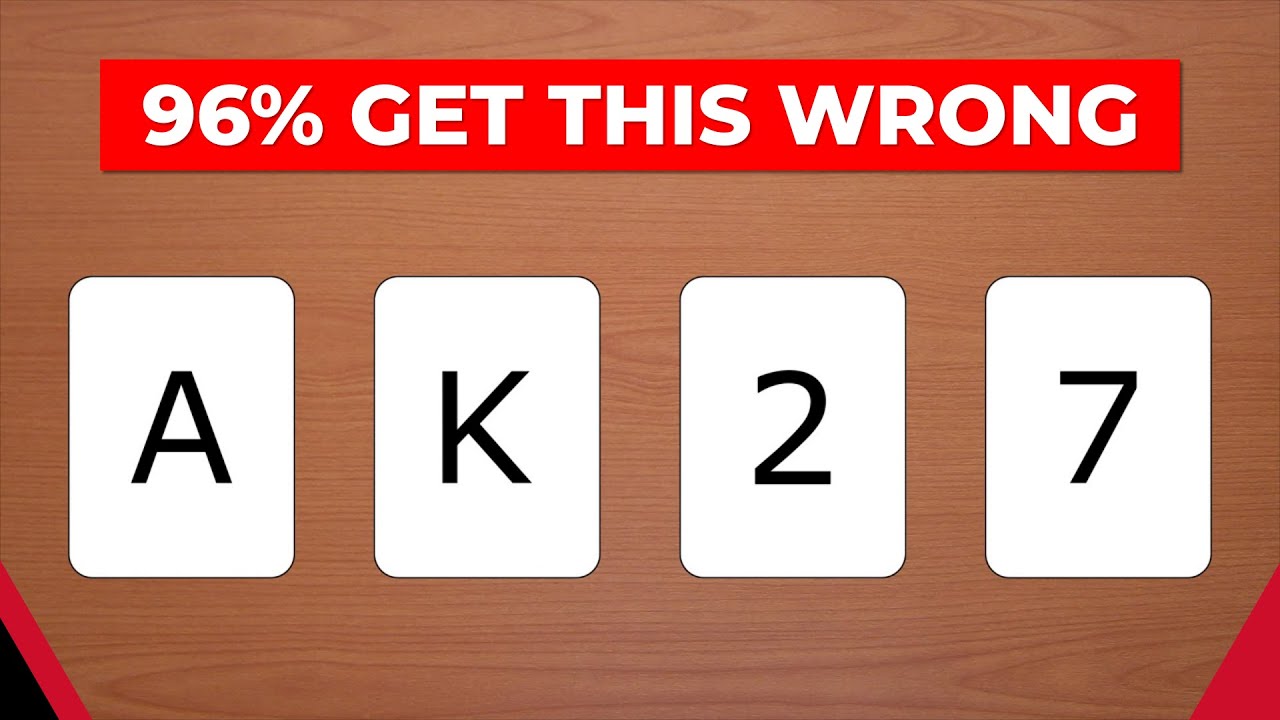
Now before you think only A is answer, think about 2 as well
People tend to seek out evidence that confirms their expectations, and they give greater weight to that evidence than evidence that would dis-confirm their expectations. Counter-evidence, if it’s even noticed at all, is usually very easy to explain away.
2.Self-fulfilling prophecy :
But social perceptions and social expectations affect more than the person who holds them. They can also affect the person about whom the expectations are held.
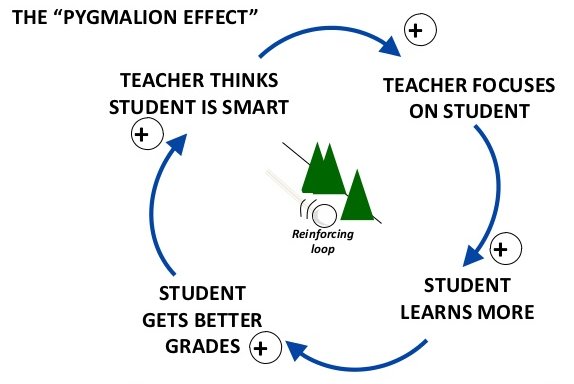
“The self-fulfilling prophecy is, in the beginning, a false definition of the situation, evoking a new behavior which makes the originally false conception come true [thereby perpetuating] a reign of error.
For example, We consider the Pygmalion effect. https://www.wisegeek.com/what-is-the-pygmalion-effect.htm
3.Behavioral confirmation :
Behavioral confirmation takes place when people’s social expectations lead them to act in a way that causes others to confirm these expectations. In other words, behavioral confirmation is a social type of self-fulfilling prophecy.
Let me give you an example from one of the first and best known studies documenting behavioral confirmation. In this study, published by Mark Snyder and Bill Swann, male college students competed in a reaction-time contest with another student to see who could respond most quickly over 24 trials, https://oureverydaylife.com/deal-someone-always-wants-argue-37373.html.
In other words, a balanced view of social perception is that, on one hand, it can be distorted by all sorts of factors, just as any other perception can be, but on the other hand, it can also operate with surprising efficiency.
4.A thin slice of behavior, a brief observation, a small sample of behavior :
Clearly, people can size up strangers with remarkable speed, but the results we’ve discussed leave two key questions unanswered. First, can people make thin-slice judgments that are accurate when it comes to personal characteristics and other aspects of a person’s identity? Remember, we don’t know whether the candidates who were judged competent actually are competent; we just know that perceptions of competence predict election outcomes. And second, if people can make accurate judgments, how fast can they do it?
For example, one idea is that there may be evolutionary value in being able to rapidly judge if other people are threats, potential partners, or even effective leaders. There’s also some evidence that our brains are wired to process emotions more rapidly than cognition’s.
But what about judgments made in person?
So, essentially, what people do is make up their mind about a person and what that person’s like, generally within the first 15 seconds. Sometimes, you could make your mind up so quickly that you just didn’t give them the benefit of any further doubt.
If you convey a bad first impression, you have to work very, very, very hard indeed. There was a little bit of research that showed that it takes eight positive pieces of positive information before you can overcome a first, bad first impression. My view would be that even that’s very hard.
5.Attribution theory :
It’s a theory about how people interpret behavior—how they make “causal attributions,” or causal explanations, for their behavior as well as the behavior of other people.
Why should anybody care? Why does it matter how people explain behavior? Well, because the way you explain behavior often determines what you’ll do about it. If, for example, you fail an exam because you haven’t prepared for it, you might study harder the next time around. But if you attribute the failure to the exam being unfair if that’s your explanation.
People generally explain behavior in terms of three possible causes,
- The first one is simply the person that is, something about the person may have caused the behavior.
- Second, entity, some enduring feature of the situation or the stimulus, the entity, something outside the person may have caused the behavior.
- finally, time, something about the particular occasion may have caused the behavior.
Psychologist proposed that these attributions are based largely on three corresponding sources of information.
- First, people look at consensus: Do other people respond similarly in the same situation? Is there a sort of consensus behavior in response to the situation?
- Second, distinctiveness: Do other situations elicit the same behavior, or is this one distinctive in some way?
- finally, consistency: Does the same thing happen time after time?
I want to talk about just one factor that influences causal attributions, whether they’re accurate or whether they’re biased, and that factor is something social psychologists call “salience.” A salient stimulus is one that grabs your attention in some way, that’s prominent.
Perceptions of causality are partly a function of where one’s attention is directed within the environment. And attention is, in turn, a function of salience: we pay more attention to things that are salient.
For example, salience and causal attribution by Shelley Taylor and Susan Fiske.
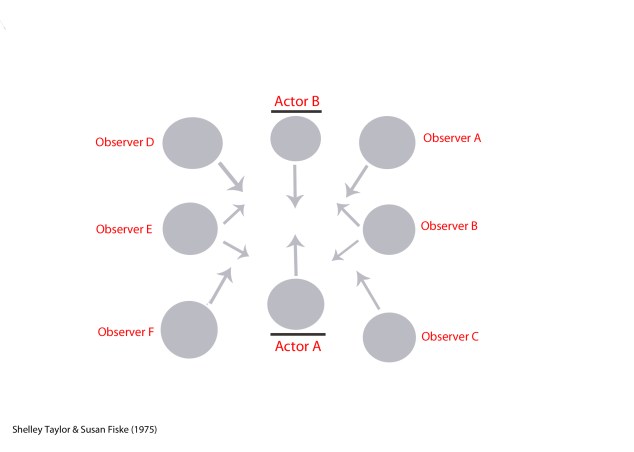
So, the main point to take away from these studies on salience is that causal attribution is not simply a matter of logical deduction; it’s also partly a matter of sensory perception— of what we happen to be looking at at the moment or happen to be hearing at the moment. Again, we’re coming back to the psychological construction of reality. Usually, that psychological construction helps us make very accurate causal attributions—usually, but not always.
But there’s one major exception: people don’t always pay attention to consensus information when they make causal attributions. Consensus information also failed to affect judgments of how people thought they would have acted had they been in the original experiment.
6.False uniqueness effect :
A false belief that when it comes to our good deeds and other desirable behaviors, we’re more unique than we really are, a false belief in which we see ourselves as a cut above the pack, which, of course, not all members of the pack can be.
Studies have found that people do pay attention to consensus information in some instances, but surprisingly often, knowledge about what other people do has relatively little effect on causal attributions. In fact, the tendency to underestimate the impact of situational factors and overestimate the role of dispositional factors unique to the individual is known in social psychology as the “fundamental attribution error.”
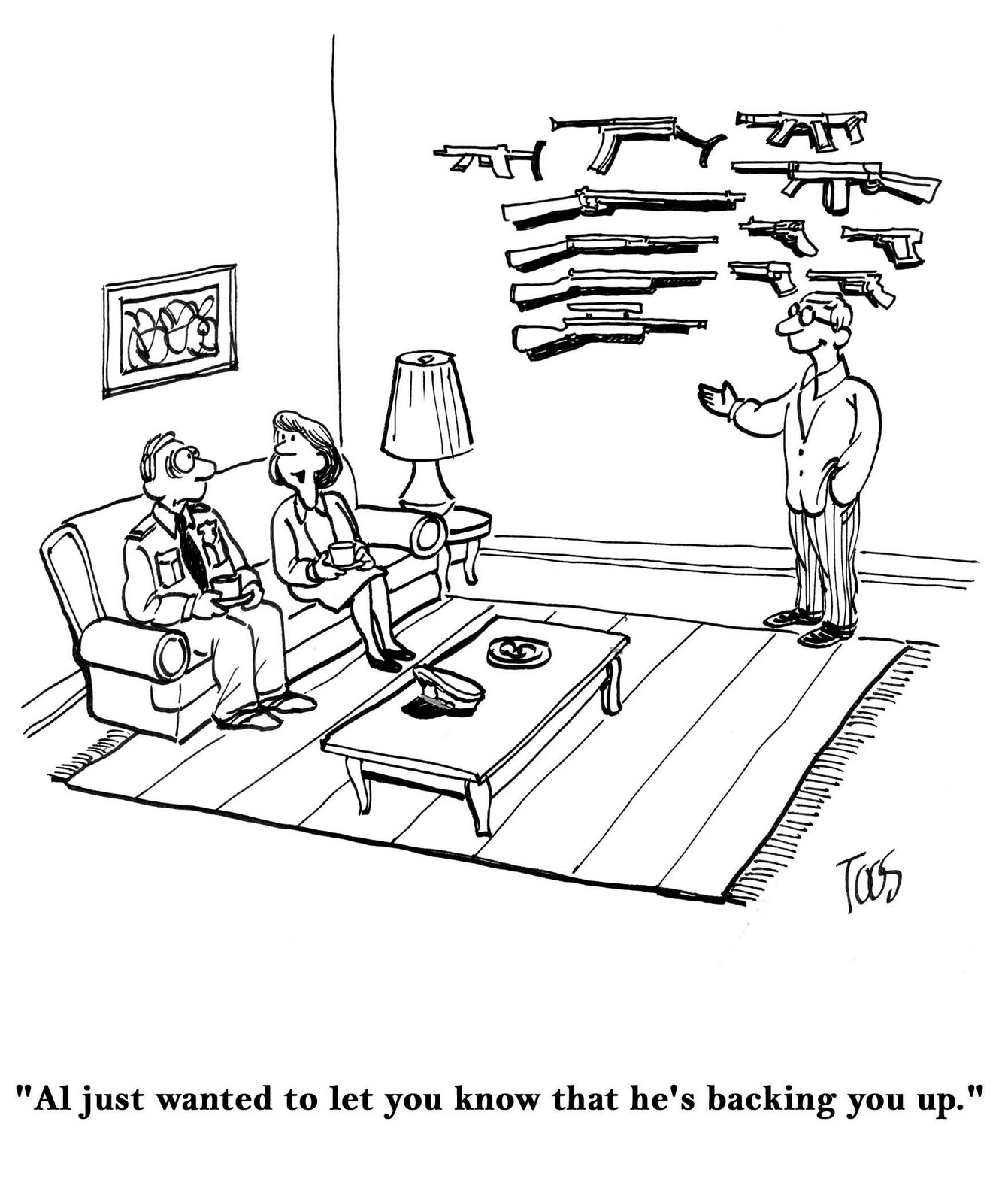
7.The fundamental attribution error :
The fundamental attribution error is a true error, not simply a bias or a difference in perspective, because people are explaining behavior in terms of an individual’s disposition even when you can demonstrate that the person’s disposition had nothing to do with why the behavior occurred.
[Image no longer available]
8.Actor-observer differences :
The classic finding here is that actors are more likely to explain their behavior as a function of situational factors than are observers (that is, people watching the actor behave). Unlike the fundamental attribution error, which is truly an error, the actor-observer difference in attribution is simply a difference, a bias in viewpoint; there’s not necessarily a right or wrong answer.
To actors, especially actors explaining their role in a negative outcome, the most salient thing is often the situational obstacles that they faced. So, you’d expect actors to either view the situation as relatively causal or at least not focus heavily on their own disposition. But to observers, the most salient thing is typically the actor—the person they’re observing.
For more information, https://www.verywellmind.com/what-is-the-actor-observer-bias-2794813
9.Attitude-behavior inconsistency :
We hold certain attitudes about the environment, we hold certain attitudes about plastic products, yet for a variety of reasons some of which may be quite legitimate we behave at variance with our attitudes. We behave differently than the attitudes that we hold.
Darley and Batson were interested in the factors that lead people to help someone who’s in trouble, https://www.psychologytoday.com/us/blog/darwins-subterranean-world/201703/my-favorite-psychology-study
[Image no longer available]
Does this mean that attitudes are never related to behavior? Not at all. There have by now been over ten meta-analyses on the link between attitudes and behavior, and the evidence suggests that at least in some cases, the attitude bone and the behavior bone are loosely connected, and there are some cases in which they’re strongly connected.
When the attitude is strongly held or potentfor instance, attitudes acquired through direct experience. When the attitude is easy to recall and has been stable over time. When people are made aware of themselves and their attitudes for example, the attitude-behavior link happens to be stronger, typically, when people can see themselves behave in front of a mirror. And when outside influences are kept to a minimum instead of people being in a rush, for example.
10.Cognitive dissonance :
According to Festinger’s theory of cognitive dissonance, people are generally motivated to reduce or avoid psychological inconsistencies,
Well, in 1959 the same principle was demonstrated in what may well be the best known cognitive dissonance experiment ever conducted, a senior thesis, as it turns out, carried out by Leon Festinger’s student, Merrill Carlsmith.
[Image no longer available]
The bottom line is that cognitive dissonance theory has two main prongs.
- First, the act of holding two incompatible thoughts creates a sense of internal discomfort, or “dissonance.”
- Second, people try to reduce or avoid these feelings of tension whenever possible.
11.Self Perception Theory :
According to self-perception theory, dissonance findings have nothing to do with a negative drive state called dissonance. They have only to do with how people infer their beliefs from their own behavior. Like dissonance theory, Bem’s self-perception theory has two main prongs:
- First, individuals come to know their own attitudes and emotions and other internal states partially by inferring them from observations of their own behavior and the circumstances in which their behavior occurs.
- Second, to the extent that internal cues are weak, ambiguous, or uninterruptible, the individual is functionally in the same position as an outside observer. It just so happens that the person you’re observing is yourself.
For more information, https://www.learning-theories.com/self-perception-theory-bem.html
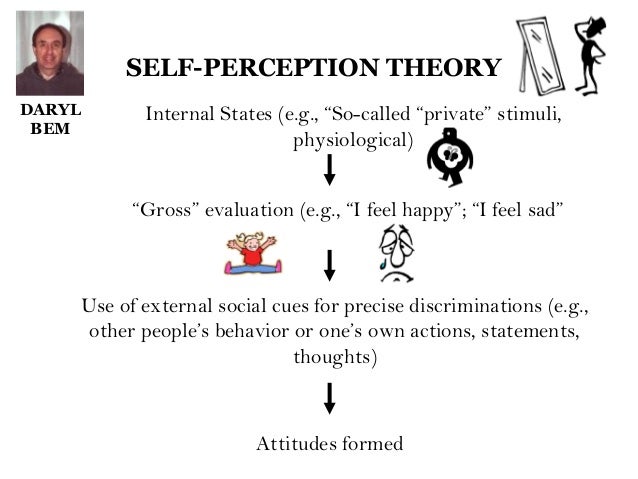
The difference between self-perception theory and cognitive dissonance theory is that self-perception theory explains classic dissonance findings in terms of how people infer the causes of their behavior. It is essentially attributional in nature, whereas cognitive dissonance theory explains findings in terms of a natural tendency to reduce inner conflict, tension, dissonance.
Although there are many different flavors of cognitive dissonance, most situations fall into one of two general categories.
- The first is “predecisional dissonance,” in which dissonance or the possibility of dissonance influences the decisions people make. So, in this case dissonance comes before people make a decision.
- The other type is “postdecisional dissonance,” in which dissonance (or again, the possibility of it), follows a choice that’s already been made, and efforts to avoid or reduce this dissonance affect later judgments. So, in this case, dissonance comes after a decision.
12.Secrets from the Science of Persuasion :
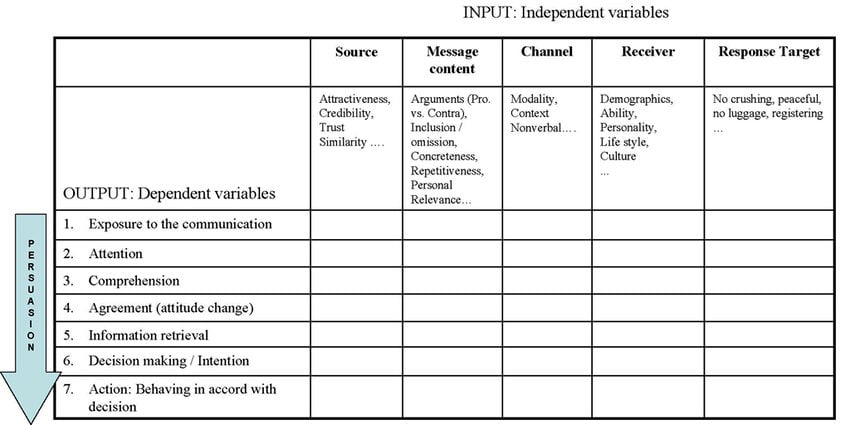
Bill McGuire, a Yale attitude researcher, in a landmark research review. McGuire created a matrix with independent variables, or variables under the control of the experimenter. McGuire’s five categories of independent variable were the following:
- Source variables—that is, variables having to do with the persuader, the source of the communication.
- Message variables—that is, variables concerning the way a message is constructed (so, for example, whether it uses humor, or fear appeals, or informative statistics, and so on).
- Channel variables—that is, variables related to whether a persuasive appeal is given in person, on television, in magazine advertisements, the Internet, or other channels of communication.
- Receiver variables, or variables having to do with the audience—the receivers or recipients of the message.
- Target variables, or variables that have to do with the thing you’re targeting for change, such as getting people to wear seat belts or buy a product, vote for a candidate, and so on.
The output variables included things such as paying attention, liking, understanding, agreeing, remembering the message, deciding, acting on it, and so forth.
1.Attitude inoculation :
Whether to acknowledge counter-arguments that is, arguments against your own position. Research tends to show, however, that it’s better to acknowledge and refute counter-arguments even before presenting your own arguments, under a couple of conditions:
- First, when counter-arguments have been made salient by familiarity or controversy—that is, you know that the receivers are going to come in contact with the opposition anyway
- Second, when the receiver is highly intelligent or initially opposed to your position. In other words, if you know from the start that the receiver is smart or doesn’t agree with your position, it’s best to begin by acknowledging counter-arguments to your position, to present what’s known as a two-sided appeal:
The use of counter-arguments can also be effective in building resistance to attitude change when people already hold the position you’re advocating that is, when they’re already on your side. Here’s how. If you mildly criticize the position people hold, enough so that they defend their position and generate reasons for it, but not so much that they change their mind, it’s like immunizing them with a low-dose vaccine.
The difference between a two-sided appeal and attitude inoculation is that in a two-sided appeal, you raise the counter-arguments and then explain why they’re not convincing, whereas in attitude inoculation, you raise a mild objection, and it’s the receiver who generates the reasons why the objection isn’t persuasive.
2.Central route or Peripheral route :
A message that uses a central route to persuasion is a message based on facts, statistics, and arguments. This is the kind of message that someone who’s highly involved with the issue would find persuasive. In contrast, a message that relies on the peripheral route to persuasion is a message that uses beautiful music, idyllic settings, attractive models, or other cues that are really incidental, or peripheral, to the issue at hand. Peripheral cues are most effective when the audience isn’t too involved or critical.
3.Fear :
Fear appeals can be pretty effective as long as you give people specific steps they can take to avoid whatever the threat is. If you just scare people silly without saying how to avoid the threat, fear appeals can actually backfire. They can drive people into a state of denial.
13.Six scientifically validated principles of persuasion:
Six of these shortcuts as universals that guide human behavior.
- reciprocity : Be the first to give personalized and unexpected content.
- scarcity : People want more of less content(benefits + Unique + what they will lose)
- authority : The idea that people follow the lead of credible, knowledgeable experts.
- consistency : People like to be consistent with the things they have previously said or done.
- liking : People prefer to say yes to those that they like. But what causes one person to like another? Persuasion science tells us that there are three important factors.
- We like people who are similar to us.
- We like people who pay us compliments.
- We like people who cooperate with us towards mutual goals
- consensus :Especially when they are uncertain, people will look to the actions and behaviors of others to determine their own
Understanding these shortcuts and employing them in an ethical manner can significantly increase the chances that someone will be persuaded by your request.
14.Social influence techniques :
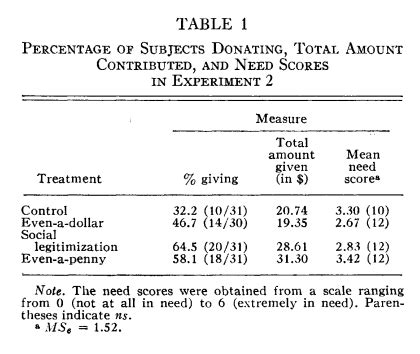
For instance, research suggests that people are more likely to do something when you get them to imagine doing it or to predict that they’ll do it in the future (say, voting in an upcoming election). Other research has found that mentioning your name before making a request can increase the chances that the other person will say yes by 50 to 100%
Engaging people in a dialogue also leads to greater compliance with a request, presumably because dialogue resembles friendship more than a monologue does. The idea is to talk with people rather than at people
http://socialpsychonline.com/2015/11/donation-psychology-even-a-penny-will-help/
15.Three of the most famous techniques :
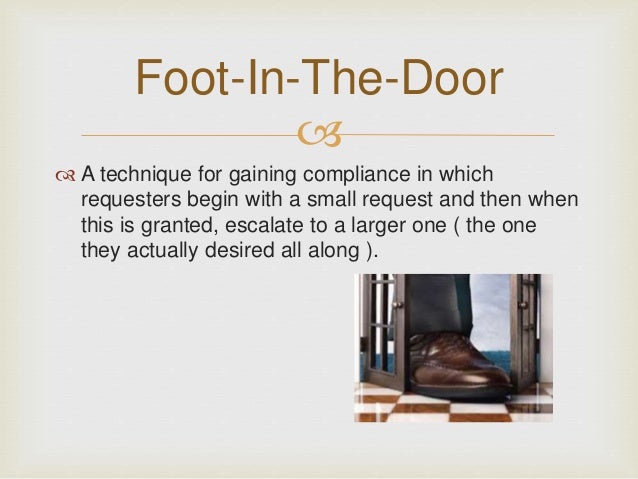
1.foot-in-the-door technique :
It was first studied experimentally by Jonathan Freedman and Scott Fraser in the 1960s. The premise is that people are more likely to comply with a large request once they’ve already complied with a smaller one a foot in the door of the larger request.
Freedman and Fraser concluded that once people agree to a request, they become in their own eyes “the kind of person who does this sort of thing, who agrees to requests made by strangers, who cooperates with good causes.” In other words, their explanation was very consistent with Daryl Bem’s self-perception theory. People watch themselves behave a certain way and conclude that they hold values and attitudes that match their behavior.
The technique is most effective when you explicitly label the person as helpful or as a supporter, saying something like “I really appreciate you supporting this effort,” which strengthens the person’s self-perception as a supporter. And the effect is strongest when the large request is presented as a continuation of the smaller request, something that builds on the person’s prior commitment.
2.door-in-the-face technique :
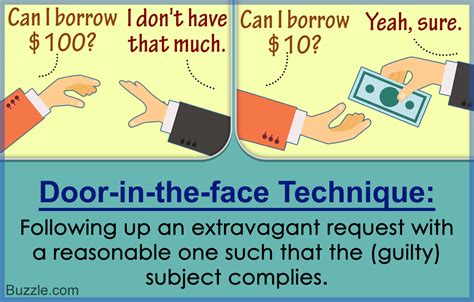
When people reject a large request, they often become more likely to comply with smaller requests down the road smaller, not equally large. That’s key here. When a large request is scaled back, it has the appearance of a concession, and because there are strong social norms encouraging reciprocity, people often feel obligated to make a concession of their own to reciprocate and meet the other person somewhere in the middle.
What Professor Cialdini found is that compliance with a small request is much higher if you can first get someone to “slam a door in your face” with a larger request.
Door-in-the-face technique is especially effective when the same person makes both requests, the two requests are made face-to-face with no delay between them, and the requests are prosocial with the same beneficiary that is, the requests are for the good of others, and the ones who benefit are the same in both requests.
3.low-ball technique :
So, although there are obviously limits, it seems that once people commit themselves to honoring a request, the request can often be increased without them withdrawing from the commitment, just as car dealers often throw a low-ball by adding conveyance fees and other charges after people have agreed to buy a car for a particular price.\
[Image no longer available]
16.Obedience to Authority :
Now, of course, there’s nothing wrong with obedience itself, and there’s certainly nothing wrong with obeying doctor’s orders. The primary danger here is blind obedience in which the authority figure is never questioned at all. To know more,
A. Stanley Milgram’s research on obedience :
A substantial proportion of people do what they are told to do irrespective of the content of the act, and without limitations of conscience so long as they perceive that the command comes from a legitimate authority.
[Image no longer available]
In essence, what Milgram showed was that people might be committing the fundamental attribution error that they were making dispositional attributions when they should have at least considered situational or environmental factors.
17.Conformity :
Conformity is a change in behavior or belief as a result of social pressure, to see an example
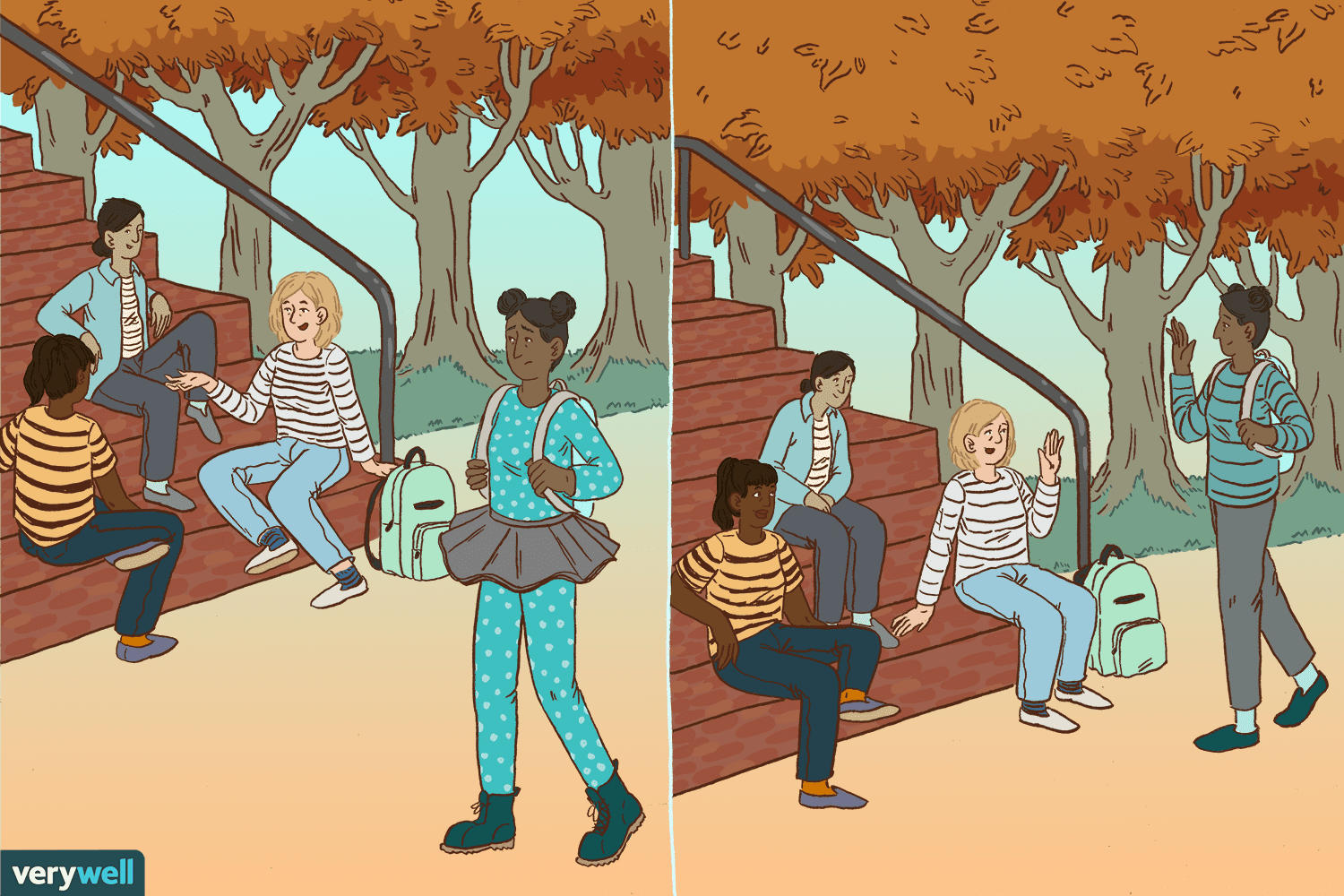
Conformity is when we give in to the group. On some occasions, on many occasions, it can be very, very difficult, very, very negative. So, for instance, when the group is wrong and you’re right, conformity is bad.
A. Solomon Asch Experiment :
Solomon Asch conducted an experiment to investigate the extent to which social pressure from a majority group could affect a person to conform.
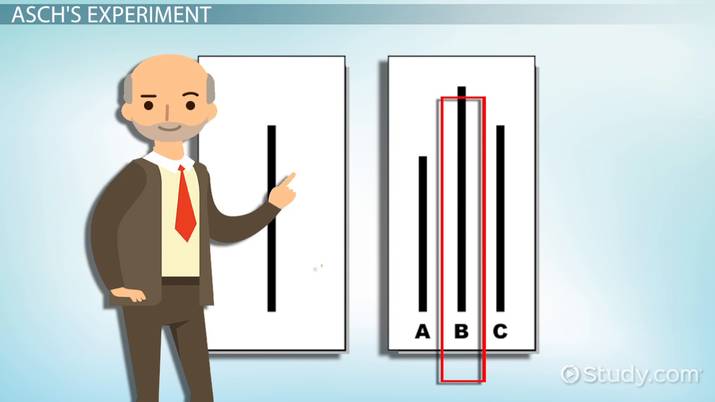
People had no good explanation for their group’s behavior, and they feared that the group would be equally at a loss to explain any dissent on their part. And the meta-analysis found that conformity increases as majority size increases, from 2 people all the way up to 13 people. Another thing that Bond and Smith found was that conformity is more likely when the majority is made up of ingroup members (that is, members of your own group for example, friends or family members) than when it’s made up of outgroup members.
One person’s conformity may be another person’s effort to be accommodating or to be supportive of others.
For more Information, https://usingsocialpsychology.weebly.com/conformity.html
B.Serge Moscovici Experiment :
What Moscovici and his colleagues showed is that a consistent minority can have a significant influence even when it’s not particularly powerful or prestigious.
For more information, https://www.simplypsychology.org/minority-influence.html
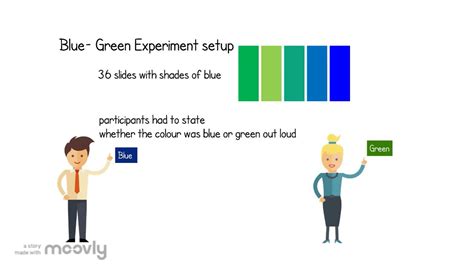
There was just one key requirement: the minority had to be consistent. If the pair of confederates labeled some slides blue and some green, majority group members were only swayed by the minority 1% of the time. The minority only had a significant influence when it consistently judged all the slides as green.
With Asch, we’ve already seen that just one person dissenting from the majority can dramatically reduce the pressure that people feel to conform. And now with Moscovici, we’ve seen that a consistent minority can get majority group members to judge the color blue as green. So, the message is “individuals count.” Minority perspectives have an effect not always and maybe not immediately but more often that it might seem.
19.De individuation :
According to Festinger and his associates, deindividuation occurs when individuals are not seen or paid attention to as individuals. The members do not feel that they stand out as individuals, and there’s a reduction of inner restraints against doing various things. What are the things? Well, on the positive side they might be uninhibited dancing, singing, or performing without feeling self-conscious. But there’s also a darker side of deindividuation.
A 2010 laboratory study suggested that even the feeling of anonymity might be enough to deindividuate people. In one of the reported experiments, participants in a room with slightly dimmed lighting cheated more than participants in a well-lit room. People in the dimmed room were just told some of the lights were out.
20.Group dynamics :
Group dynamics is just a fancy term for psychological processes and behaviors that occur either within a group or between groups.
Professor Paul Paulus, who’s a world renowned authority on brainstorming, estimates that small interacting groups (typically, meaning four or more people) generate only about half as many solutions as the same number of people working alone what’s known as a “nominal group” (a group in name only) that pools its ideas and removes duplicate ideas suggested by more than one person. Why do nominal groups tend to outperform interactive brainstorming groups?
Well, the most obvious reason is probably what psychologists call “production blocking,” the loss in productivity that comes when one person’s talking and everyone else is largely blocked from talking or developing their own ideas. To overcome, or at least minimize, that problem, Professor Paulus suggests alternating between interactive and nominal group approaches.
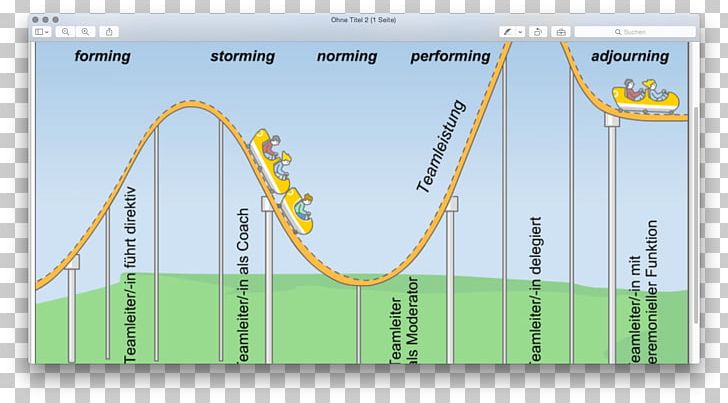
Whatever the factors, groups often try to move in one coordinated direction, while their group members are moving in all sorts of other directions, which can lead to some complicated and very messy group dynamics.
21.Abilene Paradox :
The Abilene Paradox occurs when the outcome of a group’s actions contradicts the intent of the decision.
For more information, https://psychologenie.com/explanation-of-abilene-paradox-with-examples
[Image no longer available]
22.In group & Out group effects :
As soon as people start categorizing and focusing on groups—whether they’re a member of the group or not—certain psychological processes come into play.
- First, focusing on a group can change how we see the individuals or elements within that group.
- Second, we often end up seeing one group as better or worse than another,
According to social psychologist David Wilder, who published a major review on the topic, people “often assume similarities within groups and differences between groups to a greater degree and across a broader range of characteristics than is warranted by objective evidence.” Once people are grouped, we tend to exaggerate differences between groups and similarities within groups.
You really need positive intergroup contact. But there’s another reason, and that is that intergroup biases don’t always feel like they’re biases, either because they operate outside our awareness or they don’t seem like they’re harming anyone, so they are very slow to change. An example thesis can be found on football below,
http://socialpsychonline.com/2015/07/helping-friends-and-foes-why-we-help-sometimes-and-not-others/
23.By Stander effect :
The term bystander effect refers to the phenomenon in which the greater the number of people present, the less likely people are to help a person in distress.
[Image no longer available]
For more information, https://www.psychologytoday.com/us/basics/bystander-effect
24.Aggression Relation :
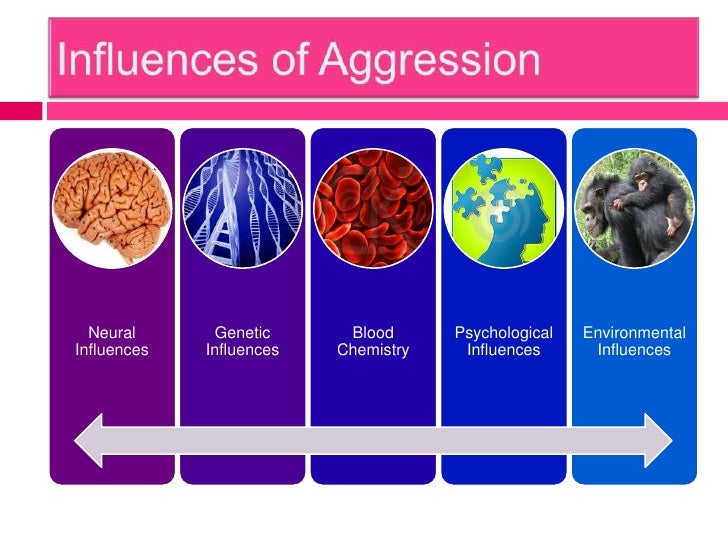
So the relationship between media violence and aggression is substantial, it’s causal, and the increase in aggression has been found in interactions among friends, among classmates, strangers, a wide variety of situations, and a wide variety of studies.
The meta-analysis examined 60 different studies and concluded not only that “amplified rates of human conflict could represent a large and critical impact of anthropogenic climate change,” but that the effects on group conflict would probably be even larger than the effects on interpersonal conflict.
25.Third side :
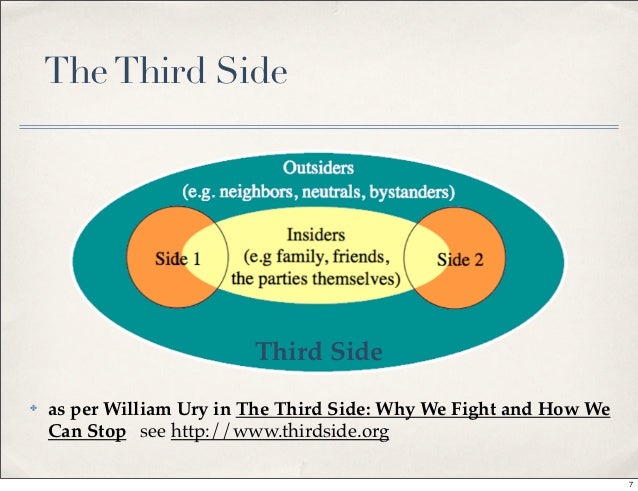
Perhaps the most fundamental way in which the third side can help is to remind the parties of what’s really at stake. Because the thing is, when we’re involved in conflict, it’s very easy to lose perspective. It’s very easy to react. Human beings we’re reaction machines. And as the saying goes, when angry you will make the best speech you will ever regret. And so, the third side reminds us of that, the third side helps us go to the balcony, which is a metaphor for a place of perspective where we can keep our eyes on the prize.
Each of us, with a single step, can take the world, can bring the world, a step closer to peace. There’s an old African proverb that goes: “When spider webs unite, they can halt even a lion.” If we’re able to unite our third side webs of peace, we can even halt the lion of war.
Principled negotiation boils down to four key points :
- First, separate the problem from the people. Don’t get into personal attacks.
- Second, focus on underlying interests, rather than expressed positions. Positions are fine, but they’re not the whole story—you have to dig deeper.
- Third, generate a variety of options before deciding what to do. Don’t narrow your options prematurely.
- Fourth, insist that the result be based on some objective standard: market value, scientific judgment, what-have-you.
26.Empathy :
Effective empathy, has to do with feeling the emotions that someone else feels— what’s sometimes called “emotional matching.” If you feel happy and I empathize, I feel happy. If you feel upset, I feel upset, too.
Cognitive empathy has to do with imagining how someone else thinks or feels, or imagining what you would think or feel if you were in that person’s position. With cognitive empathy, you’re taking the perspective of someone else regardless of whether you’re experiencing the same emotions or not. And of course, thinking and feeling usually go together, so some psychologists talk about empathy as one general trait that has both effective and cognitive components.
Even though empathy is in part genetic, there’s no question that it can be increased through training, through practice, and through certain lifestyle habits. For example, neuro-imaging studies have found that meditation enhances the activation of brain areas that are involved in emotional processing and empathy.
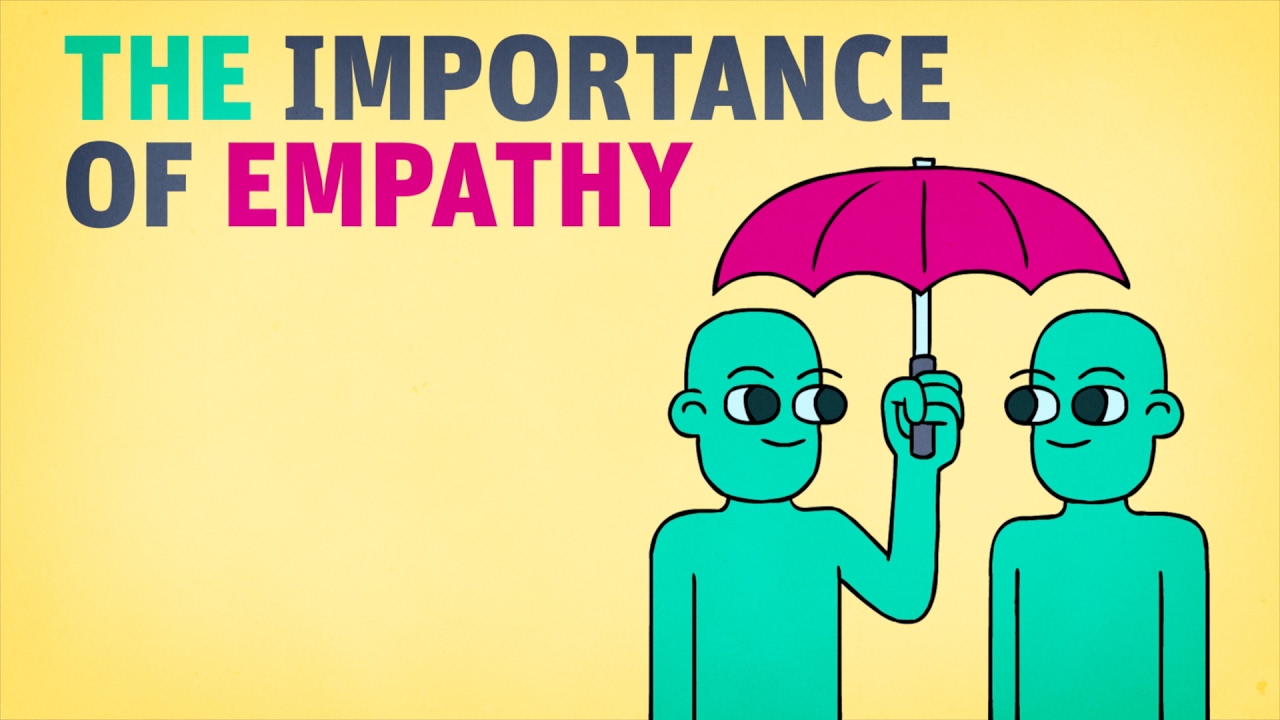
For more information, https://www.youtube.com/watch?v=BG46IwVfSu8
27.A little on positive psychology :
1.This is something our brains do all the time. When we think about how we’ll feel in the future, our thoughts are shaped by how we feel in the present. It’s as if our brains can’t believe that we might feel differently later than we do now.
2.We all know that feelings inevitably change over time that new love fades, that fresh wounds heal and yet, when we imagine our future joys and our future sorrows, we tend not to think about how time will change them.
3.Surprisingly, there’s a very powerful factor that we rarely think of as important but is essential when it comes to friendship and romantic choices. That factor is known as proximity or closeness not just physical closeness, but social closeness that is, opportunities to interact.
4.Well, in addition to proximity, another factor that’s very important in interpersonal attraction is similarity. Research has shown that people tend to be more attracted to others who are similar to them in age and education level, race and ethnicity, personality and attitudes, economic status, and even certain physical characteristics, such as height, wrist size, and blood type.
5.The physical attractiveness of a date correlates more strongly with a desire to continue dating that person than almost any other factor studied, including judgments of character and the perception of common interests.
6.Similarity is important not only in attraction but in relationship satisfaction. For example, when wives and husbands have similar personalities and interests, they tend to report greater marital satisfaction and happiness. And demographic similarities such as age, education, and religion, are also significant predictors of satisfaction and stability in friendships, romantic relationships, and marriages.
Whatever you do will be insignificant, but it is very important that you do it.
Mahatma Gandhi